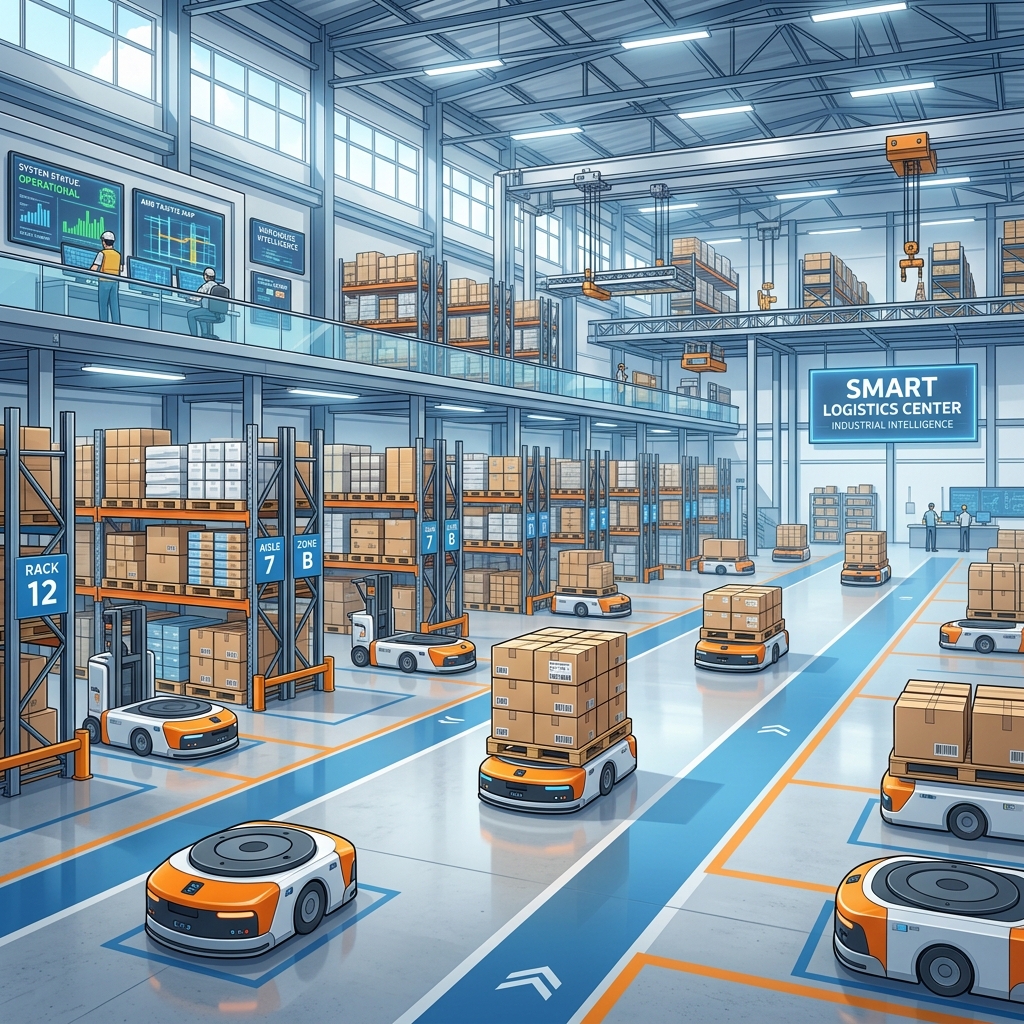
Logistics is undergoing a paradigm shift. For decades, Automated Guided Vehicles (AGVs) have been the workhorses of automated warehouses, following fixed lines or wires. However, a new player has emerged: Autonomous Mobile Robots (AMRs).
What’s the Difference?
While AGVs are reliable for repetitive tasks, they lack the flexibility to adapt to dynamic environments. AMRs, equipped with SLAM (Simultaneous Localization and Mapping) technology, can navigate freely, avoiding obstacles and recalculating paths in real-time.
Why It Matters
As e-commerce demands higher speed and flexibility, the ability to rapidly redeploy automation assets is crucial. AMRs offer a lower barrier to entry for many SMEs due to minimal infrastructure changes required.
In this article, we’ll deep dive into the technical components that make AMRs possible, from advanced LiDAR sensors to edge-computing control modules.